

PNC-27 kills human breast cancer cell lines primarily independent of p53.
“PNC-27 is a peptide that contains p53 protein amino acid residues 12–26 of its HDM-2 binding domain attached to a transmembrane-penetrating sequence, also called the membrane residency peptide (MRP).” (1)“cytotoxic against human metastatic colon adenocarcinoma cells, transformed rat brain capillary endothelial cells, human cervical carcinoma, human metastatic breast carcinoma cells, human non-small cell lung carcinoma and human osteosarcoma in vitro, but not to non-cancerous cells such as rat pancreatic acinar cells [214]. Do et al. [215] investigated the cytotoxicity of PNC-27 peptide on human breast cancer cell lines: MDA-MB-468 (mutant p53), MCF-7 (overexpressed wild type p53) and MDA-MB-157 (null p53). They found that PNC-27 induced necrosis in these breast cancer cells and this was p53-independent. PNC-27 interacted with MDM2 in human leukaemia K562 cancer cells (p53 null) and caused pore formation resulting in cell death.” (2)
How does PNC-27 kill cancer cells without relying on the master regulator of apoptosis p53?
“The results strongly suggest, that PNC-27 (and by inference PNC-28) is inserted in the plasma membrane of cancer cells upon binding to HDM2, where, by random movement, the HDM2-PNC-27 complexes assemble into oligomers and eventually into membrane pores. Influx of free PNC-27 molecules through the newly formed membrane pores into the cells... cytoplasm leads to the assembly of pores in mitochondrial membranes and rapid cell death.” (5)“PNC-27 induces cancer cell membrane lysis by acting as the whole peptide, not fragments.” (4)
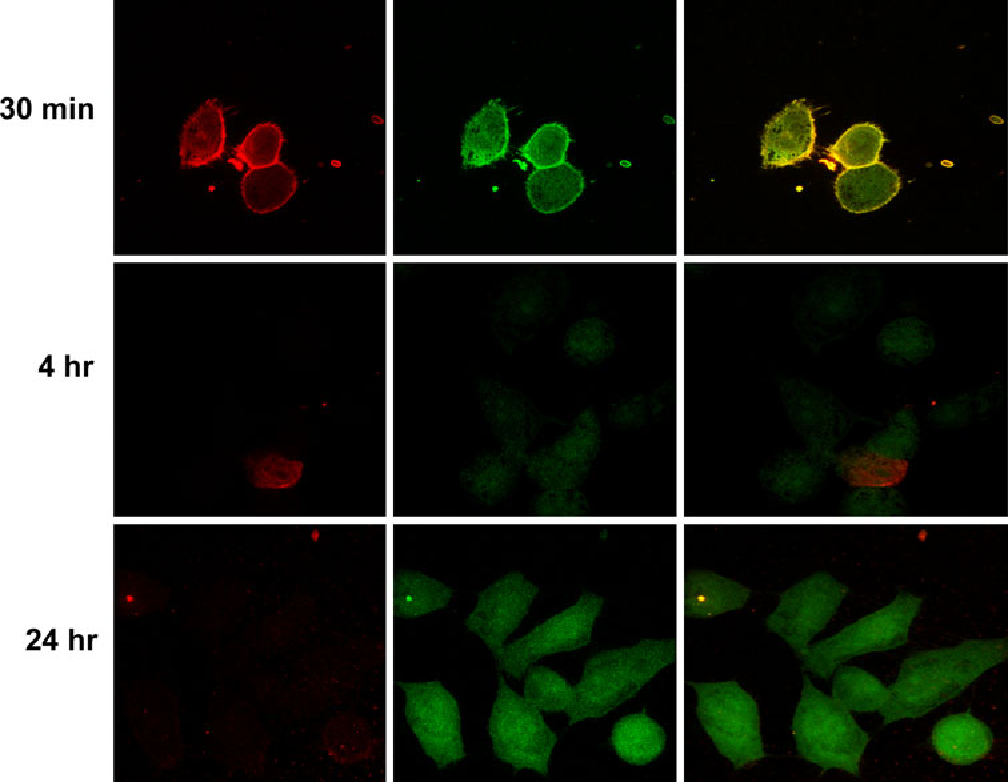
Binding of PNC-27 to HDM-2 in Cell Membranes Is Critical to its Action.
"That PNC-27 interacts with membrane-bound HDM-2 is supported by our confocal microscopy studies on PNC-27-treated cancer cells that show that PNC-27 colocalizes with HDM-2 in the membranes of these cells to which PNC-27 is lethal, a phenomenon that does not occur with untransformed cells that do not express HDM-2 in their membranes and that are not affected by PNC-27." (6)
Documented Synergy Between PNC-27 and Paclitaxel in the Treatment of Ovarian Cancer
“Paclitaxel is widely used in the treatment of gynecologic malignancies. It targets tumor cells in the M phase of the cell cycle. Cells in other phases survive the insult and repopulate the tumor.” (3)“The cytotoxic effect of PNC-27 was dependent on its binding to MDM-2. Blocking MDM-2 inhibited the killing by PNC-27. ID8 cells surviving paclitaxel demonstrated increased expression of MDM-2 and increased susceptibility to PNC-27.” (3)

